The Critical Guide to Brake Service Signs: How to Know When Your Brakes Need Replacing
Brake Service Signs: How to Know When Your Brakes Need Replacing
Your vehicle’s braking system is one of the most important safety components on the road. When it’s working correctly, it allows you to stop smoothly, maintain control, and avoid accidents. But when problems begin to develop, the warning signs often appear long before complete failure.
Understanding brake service signs is essential for staying safe and avoiding costly repairs. Many drivers wait too long to address brake issues, often because the early symptoms are subtle or easy to ignore. However, catching these signs early can make the difference between a simple brake pad replacement and extensive damage to rotors or calipers.
This guide breaks down the most common brake service signs, what they mean, and when it’s time to schedule a professional inspection.
Why Brake Service Matters
Brakes don’t fail all at once in most cases. Instead, they gradually wear down over time. Brake pads thin out, rotors become worn or warped, and brake fluid can degrade or become contaminated.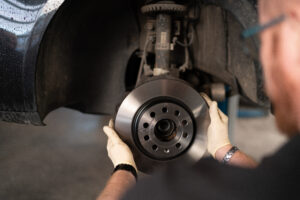
Ignoring brake service signs can lead to:
- Longer stopping distances
- Reduced control during emergency braking
- Damage to rotors and calipers
- Increased repair costs
- Unsafe driving conditions
Regular inspections and timely repairs ensure your braking system performs reliably in all conditions, including wet, icy, or high-traffic situations.
The Most Common Brake Service Signs
Knowing what to look for is the first step in identifying when your brakes need attention. Below are the most important warning signs drivers should never ignore.
1. Squealing or Squeaking Noises
One of the earliest brake service signs is a high-pitched squealing noise when applying the brakes.
This sound is often caused by:
- Worn brake pads with built-in wear indicators
- Glazed brake pads from heat and friction
- Dirt or debris trapped in the braking system
While squealing doesn’t always mean immediate failure, it is a strong indicator that brake service is needed soon. Ignoring it can lead to further wear and more expensive repairs.
2. Grinding Sounds When Braking
If you hear a grinding noise, your brake pads may already be worn down completely. At this stage, metal is likely contacting metal between the caliper and rotor.
This is one of the most serious brake service signs because it can cause:
- Rotor damage
- Reduced braking power
- Increased stopping distance
Grinding noises should be addressed immediately to avoid further damage and ensure safe driving conditions.
3. Vibration or Pulsation in the Brake Pedal
If the brake pedal vibrates or pulses when pressed, it may indicate warped rotors.
Warped rotors can be caused by:
- Excessive heat buildup
- Sudden hard braking
- Uneven wear over time
This brake service sign affects stopping smoothness and can reduce control during braking, especially at higher speeds.
4. Longer Stopping Distance
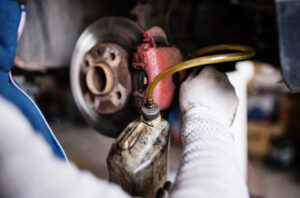 If your vehicle takes longer than usual to come to a stop, this is a serious brake service sign.
Common causes include:
- Worn brake pads
- Low or contaminated brake fluid
- Air in the brake lines
- Failing brake components
Any noticeable change in stopping distance should be inspected immediately, as it directly impacts safety.
5. Brake Warning Light on Dashboard
Modern vehicles are equipped with sensors that detect braking system issues. If your brake warning light appears, it should never be ignored.
This light may indicate:
- Low brake fluid
- Worn brake pads
- ABS system issues
- Hydraulic system problems
Even if the vehicle feels normal, this is one of the most important brake service signs that requires professional evaluation.
6. Soft or Spongy Brake Pedal
A brake pedal that feels soft or sinks too easily can indicate air or moisture in the brake lines.
This can lead to:
- Reduced braking efficiency
- Delayed response when stopping
- Increased risk in emergency situations
A spongy pedal is a clear brake service sign that should be addressed immediately.
7. Vehicle Pulling to One Side
If your car pulls left or right when braking, it may indicate uneven brake wear or a stuck caliper.
This can result in:
- Uneven braking force
- Loss of steering control under braking
- Increased tire wear
This is a serious safety concern and should be inspected as soon as possible.
How Often Should Brake Service Be Done?
There is no exact mileage interval for brake service, as wear depends heavily on driving habits and conditions. However, most brake pads last between 30,000 and 70,000 miles.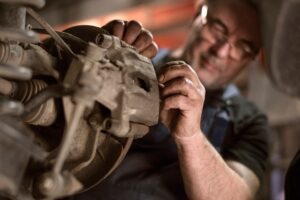
You may need service sooner if you:
- Drive in stop-and-go traffic
- Frequently brake hard
- Drive in hilly or mountainous areas
- Carry heavy loads
Regular inspections help catch brake service signs early before they become major problems.
What Happens During Brake Service?
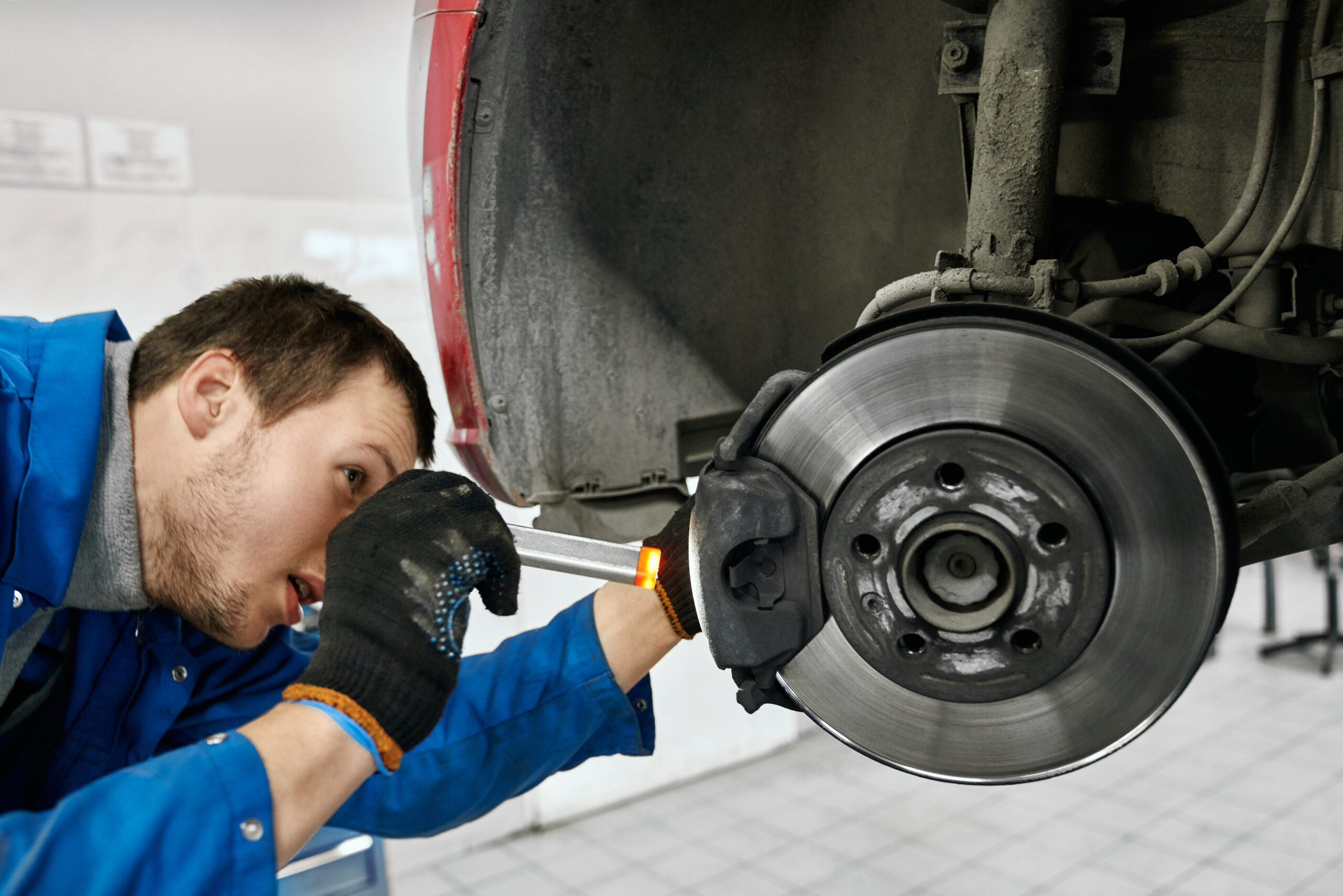
When you bring your vehicle in for brake service, technicians typically:
- Inspect brake pads and rotors
- Check brake fluid levels and condition
- Measure rotor thickness
- Test brake system pressure
- Inspect calipers and hydraulic components
Depending on wear, service may include pad replacement, rotor resurfacing or replacement, and fluid flushes.
Why Early Detection Matters
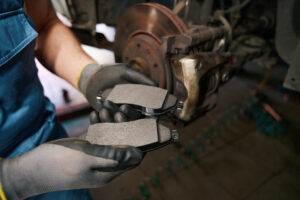 Catching brake service signs early can save both money and prevent unsafe driving conditions. Replacing brake pads is far less expensive than replacing damaged rotors or calipers caused by neglect.
Early action also ensures:
- Better braking performance
- Increased vehicle safety
- Longer lifespan of brake components
- More predictable driving behavior
Final Thoughts: Don’t Ignore Brake Service Signs
Your braking system is your vehicle’s most important safety feature. Paying attention to brake service signs like noise, vibration, warning lights, or changes in pedal feel can help you avoid dangerous situations and costly repairs.
If anything feels different when you brake, it’s always better to have it checked sooner rather than later. Even minor symptoms can quickly turn into major safety concerns if ignored.
Routine inspections and timely repairs ensure your vehicle stays safe, responsive, and reliable every time you hit the road.
Schedule Your Brake Service
If you’ve noticed any of these brake service signs—or if it’s been a while since your last inspection—it’s a good idea to have your braking system checked by a professional. You can schedule an appointment here to ensure your brakes are inspected and serviced before minor issues become serious problems.
Further Reading
National Highway Traffic Safety Administration – Brake Safety
https://www.nhtsa.gov/road-safety/brakes
AAA – Brake Maintenance and Safety
https://exchange.aaa.com/automotive/auto-repair/brake-maintenance/
Car Care Council – Brake System Basics
https://www.carcare.org/brakes/
Consumer Reports – When to Replace Brake Pads
https://www.consumerreports.org/cars/car-repair-maintenance/how-long-do-brake-pads-last-a4069256789/