When Should My Car’s Brake Pads Be Replaced?
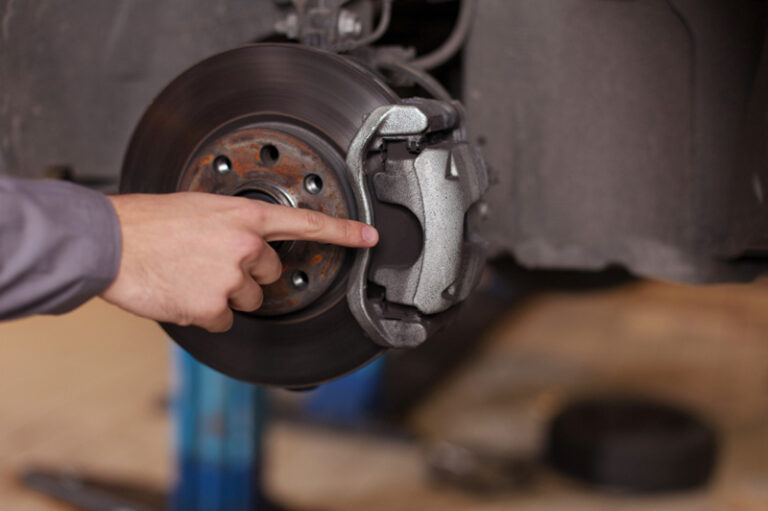
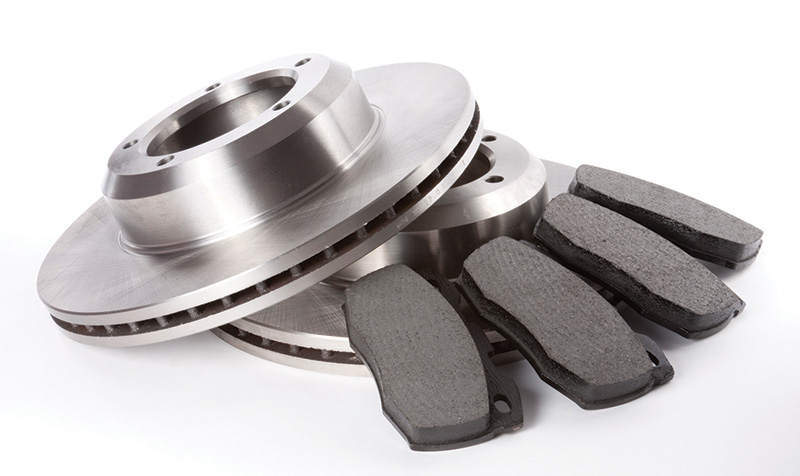
Brake pads are designed to stop your car by creating friction against the brake rotor when the brake pedal is pressed. When the material on the brake pads has worn to within 2 mm of the pad backing plate, they should be replaced with new pads. To ensure that the pads have not worn below the minimum thickness, your mechanic will inspect the brake pads and braking system every 10,000 miles.
Signs That Your Brake Pads Need Replacing
The Brake Pad Indicator Light Stays On
If your car is newer it may have a brake wear indicator on the dashboard to alert you when electronics on the brake indicate that the pads are in need of replacement. Consult your owner’s manual to identify what the brake pad warning symbol looks like.
The vehicle may also have brake system warning lights and/or maintenance reminder messages. If the brake system warning light illuminates, the vehicle inspected and repaired as soon as possible.
The Brakes Are Squealing
When the brake pad material wears down close to the backing plate, you may hear a squealing or squeaking noise while driving. The sound may occur whether you are applying the brakes or not. That squealing noise is caused by a wear indicator that’s designed to alert you that the brake pads are getting low and need to be inspected.
If you hear a grinding noise while braking it could mean that the brake pads are completely worn down, causing the metal backing of the brake pad to contact the rotor. You should stop driving the vehicle until the brakes are repaired. Brake pads should always be replaced as a set and not individually. Your mechanic will also inspect the rotors and brake lines for damage.
Brake Petal Feel
If the brake petal or steering wheel is pulsating, or the vehicle vibrates when braking it could be caused by uneven brake rotor wear. Rotors can be warped by high temperatures.
In some cases the rotors can be resurfaced if the damage is not too severe. You may also notice that the vehicle is pulling or wandering when braking. This could indicate a stuck brake caliper, or suspension problem.
If you’re experiencing any of the symtoms above with your vehicle, stop by Parkway Auto Care to have the brakes inspected. Driving with excessively worn brake pads or a damaged brake system can increase the stopping distance or a loss of braking control.